• Home
  • About Me
  • Work With Me
  • Praise
  • Offers
    • Relationship Cycle Breaker Course
    • Heal Your Inner Inner Child
    • 5-Day Self-Care Program
    • Healing the Mother Wound
    • Free Meditations
  • Contact
  • Members
  • Instagram
  • Facebook
  • Youtube

Recent Posts

  • Parts Quote
  • Advocating for Yourself During Medical Procedures
  • Are You Terrified of the Dentist?
  • Medical Trauma
  • A Trauma-Informed Perspective

Search The Archives

Blog Topics

  • Attachment
  • Book
  • Book Reviews
  • Business
  • disorder,
  • Family
  • Healing
  • Health
  • Meditation
  • Meditations
  • Mindfullness
  • Parenting
  • Personal Reflections
  • Podcast
  • Psychotherapy
  • Relationships
  • Religion
  • Retreat
  • Spiritual Teachers
  • Spirituality
  • Trauma
  • Travel
  • Uncategorized
  • Wellness
  • Yoga

Explore Subject Areas

Anxiety anxious attachment attachment attachment theory avoidant attachment Boundaries childhood trauma communication Compassion conflict Connection Cycle breaker Emotions Empathy Family family dynamics Healing healing journey healthy relationship Heal your Anxious attachment IFS inner child Inner child course inner child work listening love Love Language meditation Needs nervous system Parenting Podcast psychotherapy Relationships secure attachment self-awareness Self-care self-love shame support therapy Tips Trauma Trauma Healing Wellness
Menu
  • Instagram
  • Facebook
  • Youtube

Jennifer Nurick

All things Love, Attachment and Healing from Trauma

  • Home
  • About Me
  • Work With Me
  • Praise
  • Offers
    • Relationship Cycle Breaker Course
    • Heal Your Inner Inner Child
    • 5-Day Self-Care Program
    • Healing the Mother Wound
    • Free Meditations
  • Contact
  • Members
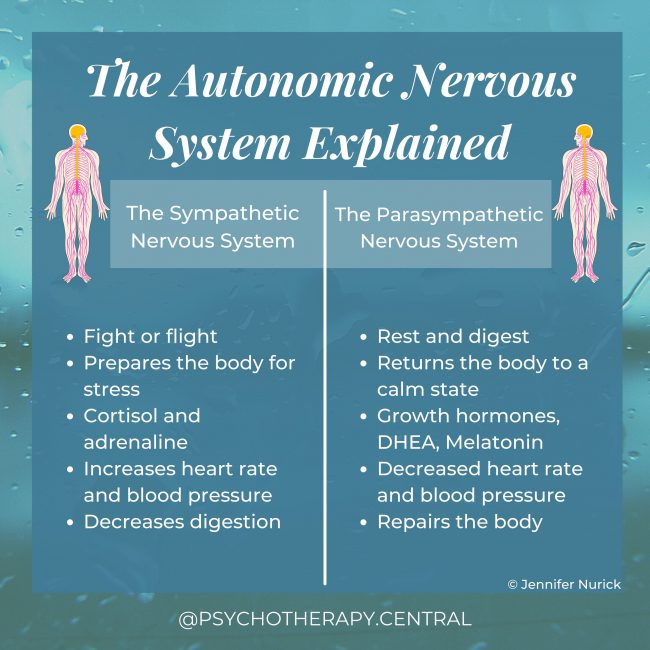
How to Regulate your Nervous System BELLY BREATHING – Take three deep breathes into your belly, long and slow, lasting about 3 seconds on both the inhalation and exhalation. SCREEN BREAK – Our nervous system becomes overstimulated with media and multitasking. Take regular breaks from screens, perhaps for 2 hours per day and one hour before sleep. MINDFULNESS – Bring your whole self into the present moment. Notice what you can hear, see, smell, taste and feel. AFFIRMATION – Repeat to yourself, “I am happy, I am healthy, I have everything I need” three or more times. INNER CHILD – Take time to connect with your Inner Child and talk to them. Find out how they are and what they need to feel safe and calm. NATURE AND SUNSHINE – Nature is a natural regulator, go somewhere in nature and notice everything around you, the colours, sounds, and feelings. Imagine you can begin to breathe with nature in this place—breath in the serotonin-producing sunshine. CO-REGULATION – Regulating your nervous system with someone else. You can do this by sharing with someone you love and enjoying something together. MAKE TIME FOR JOY – Do something you love; gardening, baking, painting, reading, singing or dancing. This tells your nervous system that you are safe.

How to Regulate your Nervous System

Jennifer March 16, 2021

Adults who have experienced trauma at an early age are prone to experiencing dysregulation of the nervous system, especially when stressed. Dysregulation is known to be linked to depression, addiction, anxiety and emotional outbursts.⁣ The good news is that we …

Read More

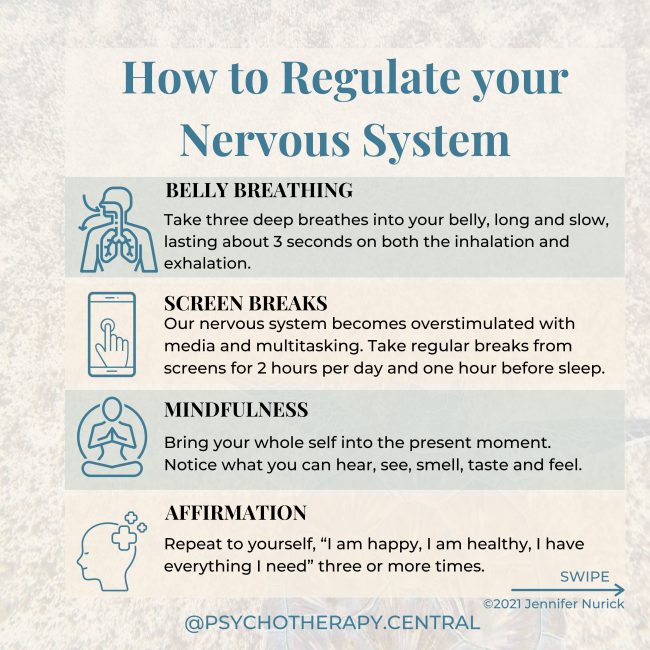
The Autonomic Nervous System Explained Sympathetic Fight or flight Prepares the body for stress Cortisol and adrenaline Increases heart rate and blood pressure Decreases digestion Parasympathetic Rest and digest Returns the body to a calm state Growth hormones, DHEA, Melatonin Decreases heart rate Repairs the body

The Autonomic Nervous System Explained

Jennifer March 16, 2021

Our nervous system functions are essential because it affects how we are physically and emotionally and how quickly we can bring ourselves back into balance after a shock or a triggering event. The autonomic nervous system (ANS) is part of …
Read More

Parenting Tips From A 10-Year-Old

Parenting Tips From A 10-Year-Old

Jennifer March 16, 2021

This was totally unprompted, she had no idea what I was going to ask her. How amazing is it that the first thing she says is tone and softness of voice! This shows the impact of using a soothing tone …
Read More

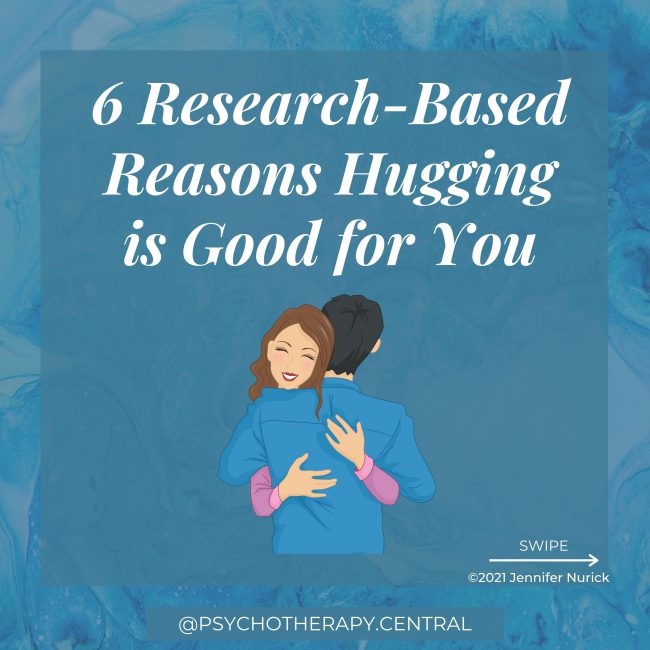
6 Research-Based Reasons Hugging is Good for You Research shows people who are hugged more have less severe illnesses Hugging can lower blood pressure Hugging can decrease your heart rate Hugging involves some deep pressure to the skin, which calms the autonomic nervous system (responsible for fight or flight) This deep pressure reduces the stress hormone cortisol During a hug, we release oxytocin (the bonding hormone) which reduces stress

6 Research-Based Reasons Hugging is Good for You

Jennifer March 16, 2021

How long to hug for? Google says 20 seconds, but I couldn’t find any research to back that up. What is important is that you have the time YOU need to relax into the hug. If you are hugging a …
Read More

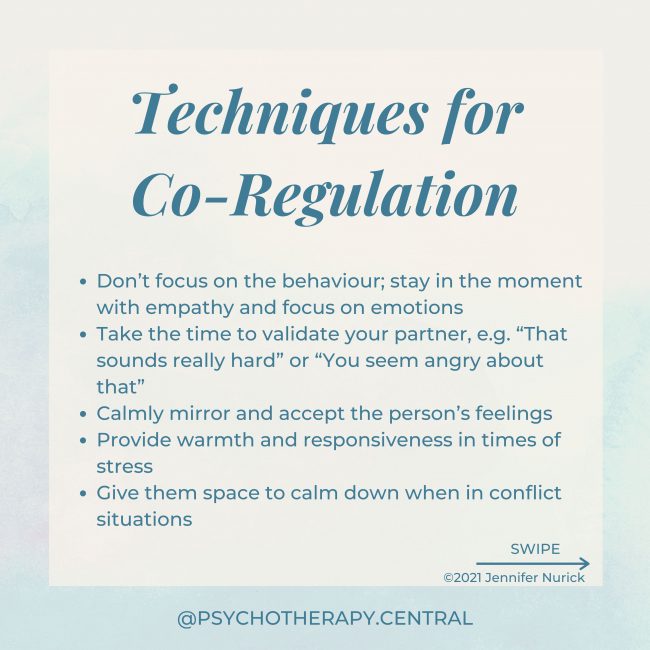
Don’t focus on the behaviour; stay in the moment with empathy and focus on emotions Take the time to validate your partner, e.g. “That sounds really hard” or “You seem angry about that” Calmly mirror and accept the person’s feelings Provide warmth and responsiveness in times of stress Give them space to calm down when in conflict situations Take three deep breaths together when one person is dysregulated Use a warm, soft tone of voice Say soothing or reassuring things Light touch as reassurance Hold hands or make other physical contact Hug for over 2 minutes – this allows enough time for the nervous system to calm.

Techniques for Co-Regulation

Jennifer March 16, 2021

Co-regulation is where one nervous system calms another. When you have a parent who is attuned to you and can regulate themselves, you are given the gift of co-regulation. Here the parent uses their voice, tone, body and nervous system …
Read More

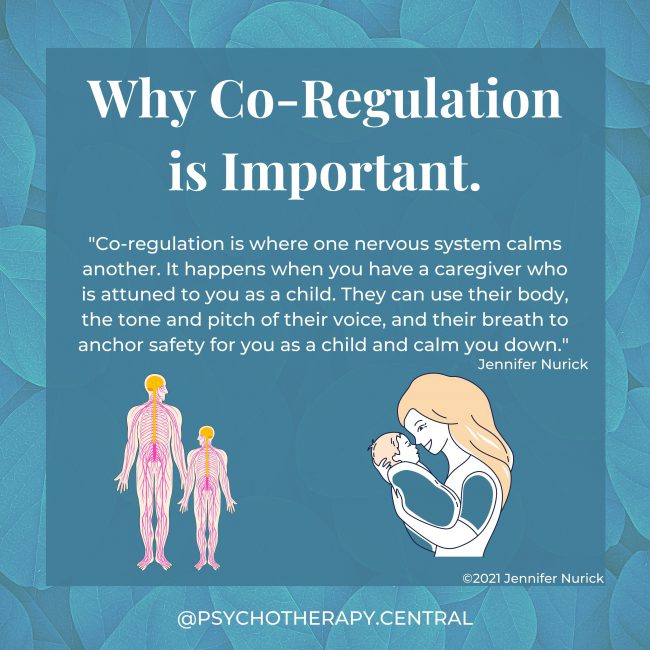
Why Co-Regulation is Important.

Why Co-Regulation is Important

Jennifer March 10, 2021

Co-regulation is where one nervous system calms another. It happens when you have a caregiver who is attuned to you as a child. They can use their body, the tone and pitch of their voice, and their breath to anchor …

Read More

THINKING OF LIMITING SCREEN TIME FOR YOURSELF?⁣

Thinking Of Limiting Screen Time for Yourself?

Jennifer March 10, 2021

We know too much screen time is not good for our kids in many ways, but are we applying the same standards to ourselves? ⁣⁣Much research has been done on screen usage, which shows it affects our bodies, minds, and …
Read More

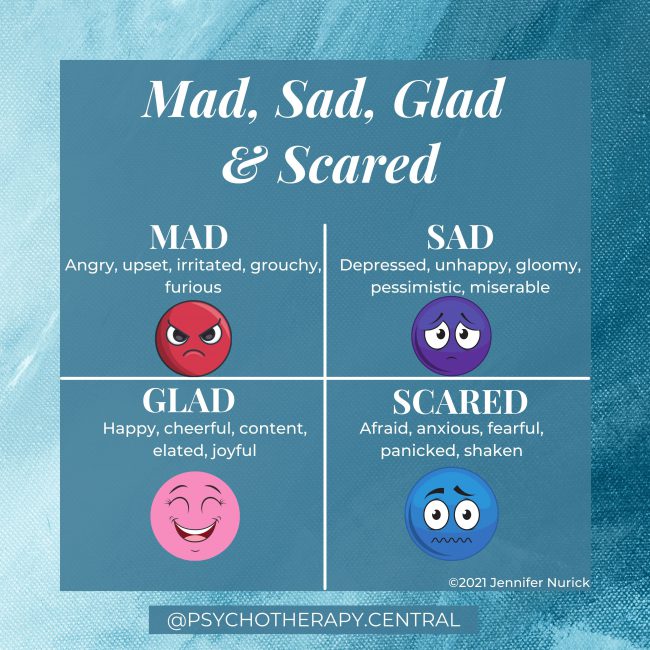
Mad Angry upset irritated grouchy furious Sad Depressed, unhappy, gloomy, pessimistic, miserable Glad Happy, cheerful, content, elated, joyful Scared Afraid, anxious, fearful, panicked, shaken

Four Basic Emotions: Mad, Sad, Glad and Scared

Jennifer March 10, 2021

The incredible shame and vulnerability researcher Brene Brown talks about the benefits of getting to know our emotions and not blocking any of them out, including the ‘bad’ ones. She says when we block the negative emotions, we also block …
Read More

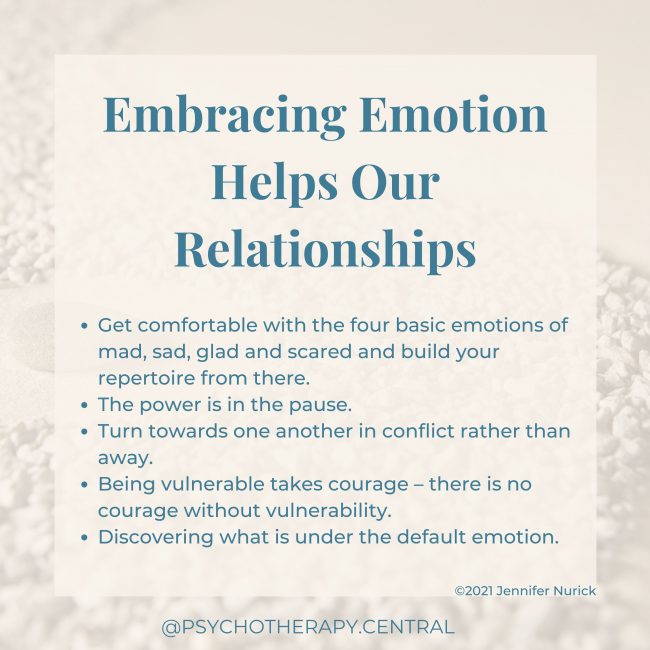
Embracing Emotion Helps Our Relationships Get comfortable with the four basic emotions of mad, sad, glad and scared and build your repertoire from there. The power is in the pause Turn towards one another in conflict rather than away Being vulnerable takes courage – courageous people are vulnerable Discovering what is under the default emotions

Embracing Emotion Helps Our Relationships

Jennifer March 10, 2021

We are not taught how to deal with our emotions at school, so most of us are left to figure it out alone. When we get hurt, the tendency is to do one of three things: move away, move closer …
Read More

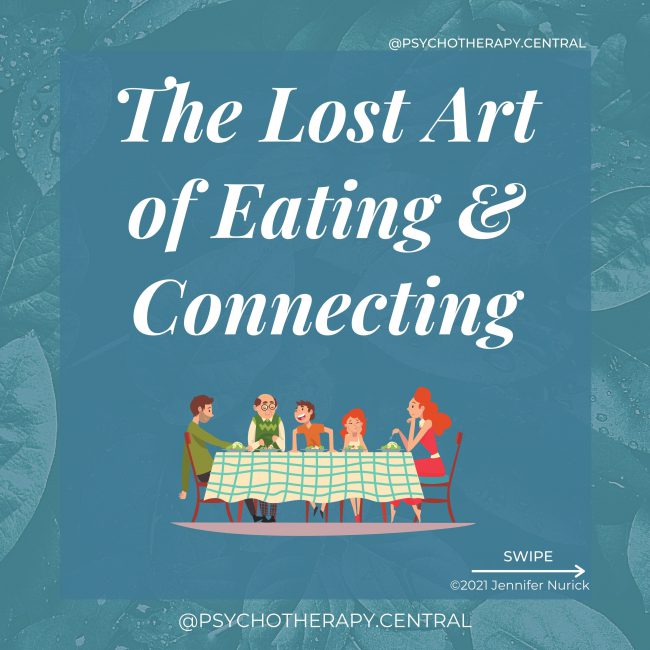
The Lost Art of Eating and Connecting Deciding who will cook, set the table and do the dishes at the end – dividing up the tasks, so they are spread equitably through the family. Taking time to enjoy the cooking process – playing music, cooking as a couple or a family. No screens at the table – to facilitate connection and communication Taking time to ask each other about your day Going around the table and sharing something you enjoyed from the day, something you learned and something that was a problem. This can be a time to share important things to us or have a giggle as a family. When done regularly, eating and connecting as a family daily can be the glue that keeps the family connected.

The Lost Art of Eating and Connecting

Jennifer March 5, 2021

I grew up eating my dinner with a tray on my lap in front of the TV watching Neighbours (an Ozzie TV show that we LOVED in the UK with Kylie Minogue ????). We were together as a family, but …

Read More

← 1 … 130 131 132 133 134 … 167 →
  • Acknowledgement of Country
  • Privacy Policy
  • Terms and Conditions
Copyright © 2025 Psychotherapy Central Health ABN 52680366082