Techniques for Co-Regulation

Co-regulation is where one nervous system calms another. When you have a parent who is attuned to you and can regulate themselves, you are given the gift of co-regulation. Here the parent uses their voice, tone, body and nervous system to calm the child. Over time, this ability is anchored in the child, and they learn how to self-regulate more and more as teenagers and adults.
When this hasn’t happened, these children, as adults, will find it challenging to calm themselves down when triggered. They have not learned the skill of self-regulation through co-regulation. If this is you, this is NOT YOUR FAULT.
The good news is that self-regulation is something that can be learned through co-regulation as an adult. When you are in a relationship with someone you trust, you can begin practising co-regulation. It helps if this is something your partner understands and your practices in co-regulation are conscious.
This might sound like: “I’m feeling really dysregulated/upset/flooded, and I would appreciate some co-regulation right now”. In some situations, you might be too distressed to ask for what you need, so it might be that your partner says, “Would you like a hug right now?” or “I can see you are feeling outraged, would you like me to hold your hand as you experience that anger?”
Experiencing this kind of love in a relationship is deeply healing. It has the power to change an insecure attachment style to a secure one. Over time, you will learn to self-regulate and fill in the developmental gap you missed.
I hope this gives you hope.
Much love on your healing journey
Jen


Discover more from Jennifer Nurick
Subscribe to get the latest posts sent to your email.
Go deeper
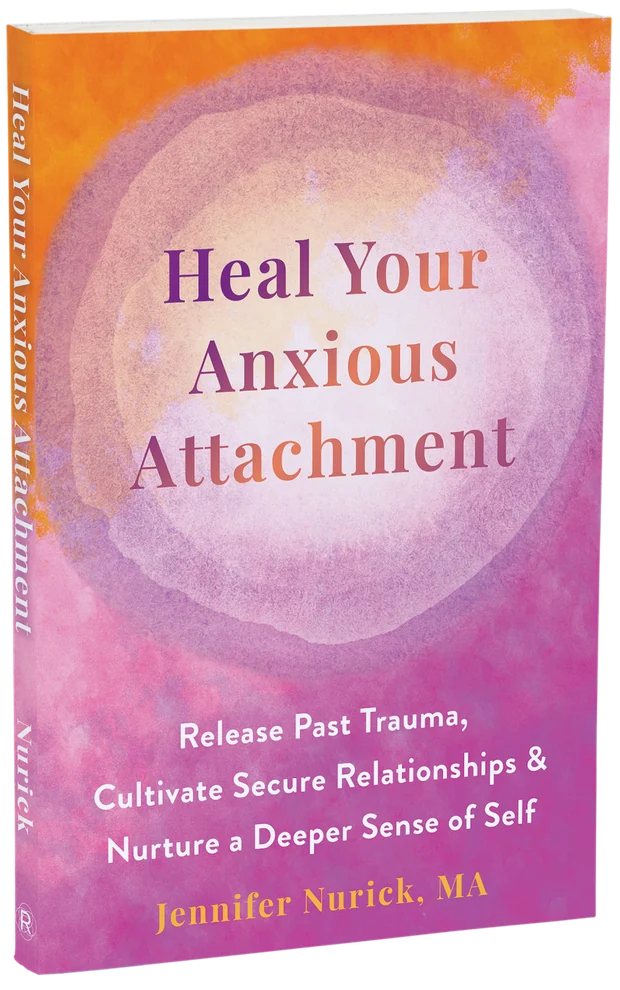
Build secure attachment from the inside out
My book and courses offer a gentle, structured way to understand your patterns and care for the parts of you that learned to protect you. If you would like personal support, you can also work with me directly.


