Sometimes your anxiety isn’t intuition. It’s an old attachment wound looking for danger. Intuition usually feels calm and clear. Attachment activation feels urgent, fearful, and consuming. An activated nervous system can make a delayed text, a change in tone, or …
Tag: IFStherapy
Why Understanding Your Patterns Isn’t Always Enough to Change Them
You can understand your patterns… and still repeat them in relationships. Many people come to therapy already understanding their patterns intellectually. They know why they people please. Why they over-function. Why they fear abandonment. Why they shut down or withdraw. …

Why Group Therapy Can Be So Profoundly Healing: Reflections on ‘Group’ by Christie Tate
I just LOVED this book — Group by Christie Tate. It reminds me why group therapy can be so profoundly healing. One of the things I loved most about the book was how honestly she captured the terror of being …

Why Understanding Your Patterns Isn’t Always Enough to Change Them
You might recognise yourself in one of these: Feeling anxious, needing reassurance, and getting activated easily. Overthinking, feeling easily triggered or rejected. Or pulling away, shutting down, and finding closeness overwhelming. Going quiet, needing space, struggling with too much closeness. …

The Part of You That Won’t Let Go Is Trying to Protect You
The part of you that won’t let go… is trying to protect you. It replays the past so you don’t get hurt like that again. It stays alert so you don’t feel caught off guard. It doesn’t need to be …
If You Keep Thinking About It, Here’s Why
If you keep thinking about it… it’s because a part of you hasn’t finished processing it yet. Something in you is still trying to make sense of what happened — or trying to protect you from ever feeling that way …

Deep Pain Doesn’t Leave All at Once — It Softens in Layers
What I see, again and again in therapy, is that deep pain doesn’t leave all at once. It softens in layers. You return to it, but each time from a different place. A different level of the spiral. One session …
When the Avoidant Part Takes Over: It’s Protection, Not Punishment
When the avoidant part takes over, it’s because closeness feels unsafe. This part learned to rely on itself. So it pulls back, shuts down, stays busy — not to punish, but to protect. Pressure doesn’t soften it. Gentleness, curiosity and …
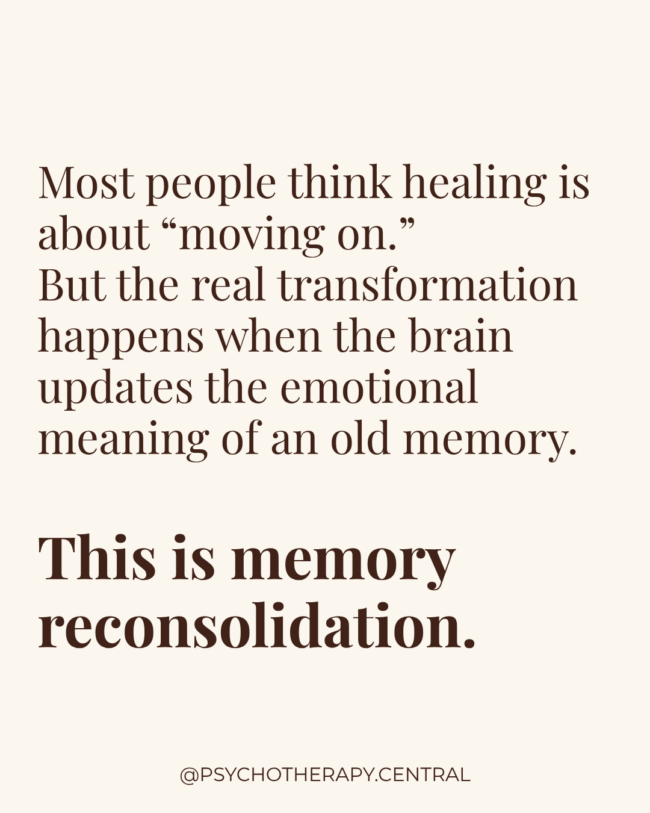
Memory Reconsolidation: Why Real Healing Is About Rewriting, Not Just Moving On
Most people think healing is about “moving on.” But the real transformation happens when the brain updates the emotional meaning of an old memory. This is memory reconsolidation. Memory reconsolidation is the process where an old emotional learning becomes activated, …
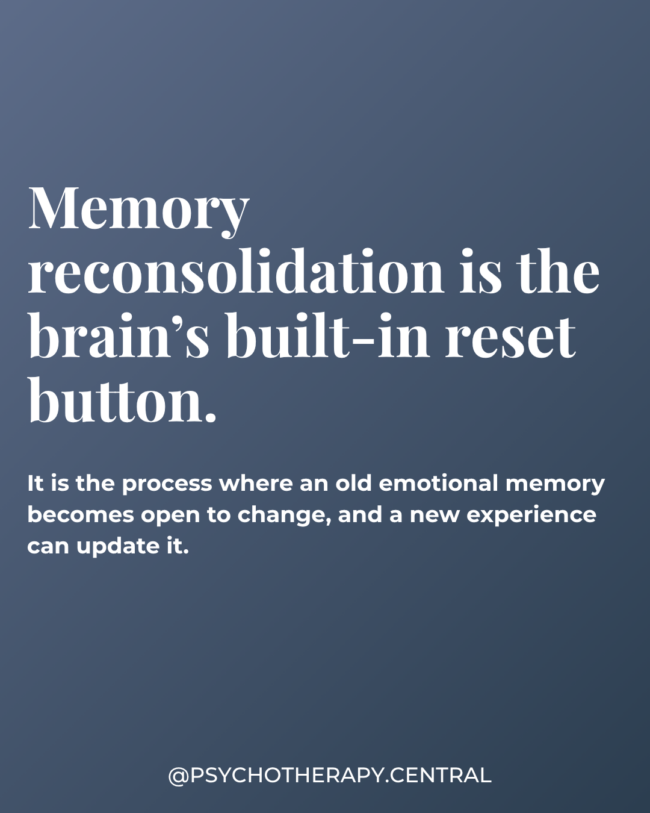
Memory Reconsolidation: How Your Brain Rewrites Old Emotional Stories
Healing is not only psychological. It is neurological. Memory reconsolidation is the process your brain uses to update old emotional learning so that your triggers lose their grip and your system begins to feel safer from the inside out. Memory …