Disorganised Attachment Style: Signs, Causes and How to Heal

If you have a disorganised attachment style, you may know the feeling of wanting closeness desperately and then panicking when you get it. You reach for someone, and then something in you wants to run. Relationships can feel confusing, intense and exhausting.
This pattern makes complete sense when you understand where it comes from. And it can change. In this guide I’ll explain what disorganised attachment is, how it shows up in adults and relationships, and how healing happens.
What is disorganised attachment?


Disorganised attachment is one of the four attachment styles described in attachment research, alongside secure, anxious and avoidant. It was identified by researchers Mary Main and Judith Solomon in the 1980s, when they noticed some infants in Mary Ainsworth’s “Strange Situation” studies didn’t fit the existing categories. Reunited with their caregiver, these children showed contradictory behaviour: approaching and then freezing, reaching out while looking away, or seeming confused and disoriented.
In adults, disorganised attachment is often called fearful-avoidant attachment. It combines elements of both anxious and avoidant patterns: a strong longing for closeness, alongside a deep fear of it.
What causes disorganised attachment?
Children are wired for survival. They adapt to whatever environment they are in to get their needs for food, love and safety met.
Disorganised attachment usually develops when a caregiver is both a source of comfort and a source of fear. Sometimes the parent is safe and loving; at other times they are frightening, unpredictable, neglectful or abusive. Researchers Mary Main and Erik Hesse described this as “fright without solution”. The child’s biological drive is to run towards their caregiver when scared, but the caregiver is also what scares them. There is no strategy that works, so the child’s attachment system becomes disorganised.
This can happen when a parent:
- Is abusive, violent or frightening
- Has unresolved trauma or loss of their own, and becomes frightened, dissociated or overwhelmed around the child
- Struggles with addiction or mental illness that makes them unpredictable
- Swings between warmth and rage, or between attention and neglect
Disorganised attachment is often passed down through generations until someone in the family is able to integrate the trauma. That person becomes the cycle breaker.
Signs of disorganised attachment in adults
You might recognise some of these patterns:
- Longing for intimacy, then feeling overwhelmed or trapped when it arrives
- Swinging between clinging to a partner and pushing them away
- Difficulty trusting others, even when they are trustworthy
- Strong emotional reactions that feel hard to control
- Dissociating or “going blank” during conflict or closeness
- A harsh inner critic and intense shame, especially after conflict
- Feeling drawn to chaotic relationships, and bored or uneasy in calm ones
- Difficulty soothing yourself when upset
Disorganised attachment in relationships
Relationships are where this pattern is felt most strongly. Often things start off wonderfully. Then, as closeness grows, the old fear wakes up.
One day you feel completely into the relationship. The next you are convinced your partner is about to leave or hurt you, or you feel a sudden urge to withdraw. For your partner, this can be deeply confusing. They receive mixed messages: come closer, go away.
If you have a disorganised style and you are with a securely attached partner, the relationship might even feel boring at first. When chaos is familiar, calm can feel like something is missing. Part of you may be unconsciously looking for what you know. I explore this in The Dance of the Disorganised and the Securely Attached.
Two partners with disorganised attachment can find themselves in an especially intense cycle, triggering each other’s fears of both closeness and abandonment.
How to love someone with disorganised attachment
If your partner has a disorganised style:
- Be consistent. Predictability builds safety, though you don’t have to lose your spontaneity.
- Don’t take the push-pull personally. It is usually fear, not a verdict on you.
- Create boundaries together. Talk about what you both need at a calm time, not in the middle of a trigger.
- Stay steady, and look after yourself. You can be loving and also have limits.
- Support professional help. A partner can be a big part of healing, but they can’t do a therapist’s job.
You can read more in How to Be With a Partner Who Has Disorganised Attachment.
Is disorganised attachment a disorder?
No. People sometimes search for “disorganised attachment disorder”, but disorganised attachment is not a mental health diagnosis. It is a pattern of relating that developed as an adaptation to a frightening early environment. It is different from Reactive Attachment Disorder, which is a clinical diagnosis made in childhood.
Disorganised attachment through an IFS lens
Internal Family Systems (IFS) offers a compassionate way to understand disorganised attachment. Inside, there are often parts pulling in opposite directions. A young part longs desperately to be held. A protector part is terrified of closeness and slams the brakes on. Another may flood with anger, or take you away from your body altogether.
None of these parts are wrong. Each one developed to help a child survive an impossible situation. In IFS we slow down and get to know each part, so they no longer have to fight for control. As the younger parts feel heard by your Self, the protectors can begin to relax. This inner relationship becomes the foundation of inner secure attachment, and it changes how you show up with others.
How to heal disorganised attachment
Healing disorganised attachment is deep work, and it is very possible. Many people move towards what is called earned secure attachment: a secure way of relating that is built in adulthood.
1. Be gentle with yourself. It is normal to want closeness and also to be frightened when it starts to happen. That is your history, not a character flaw.
2. Learn your patterns. Notice what happens in your body and mind as closeness increases. Awareness creates choice.
3. Widen your window of tolerance. Practise noticing when you are becoming overwhelmed or shutting down, and use grounding to come back to the present.
4. Reconnect with your body gently. Many people with disorganised attachment learned to leave their body to cope. Somatic approaches help you return at a pace that feels safe.
5. Work with anger and grief. There is often a great deal of both from childhood, and it deserves space.
6. Choose safe relationships. Over time, consistent, kind people help your system learn that closeness can be safe.
7. Work with a trauma-informed therapist. Because disorganised attachment usually involves childhood trauma, it heals best in a safe, attuned therapeutic relationship. I work with disorganised attachment through attachment and trauma therapy, IFS therapy and EMDR, all online.
Frequently asked questions
What is disorganised attachment style?
Disorganised attachment is an attachment style in which a person both longs for closeness and fears it, usually because a childhood caregiver was a source of both comfort and fear.
What is the difference between disorganised and fearful-avoidant attachment?
They describe the same pattern. Disorganised is the term used in childhood attachment research, while fearful-avoidant is commonly used for adults.
What does disorganised attachment look like in adults?
It often looks like push-pull in relationships, difficulty trusting others, strong emotional reactions, dissociation during conflict, and feeling uneasy when relationships are calm.
Can disorganised attachment be healed?
Yes. Through therapy, safe relationships and self-compassion, many people develop earned secure attachment as adults.
How do I know if I have disorganised attachment?
If you recognise a strong pull between wanting closeness and fearing it, along with a history of frightening or unpredictable caregiving, it may fit. A therapist trained in attachment can help you explore it.
A final reflection
Disorganised attachment is what happens when a child has to find safety in the very place that frightens them. With patience and support, you can build the safety you never had, inside yourself and with others.
What does the part of you that pulls away need to feel safe enough to stay?
Love, Jen
Discover more from Jennifer Nurick
Subscribe to get the latest posts sent to your email.
Go deeper
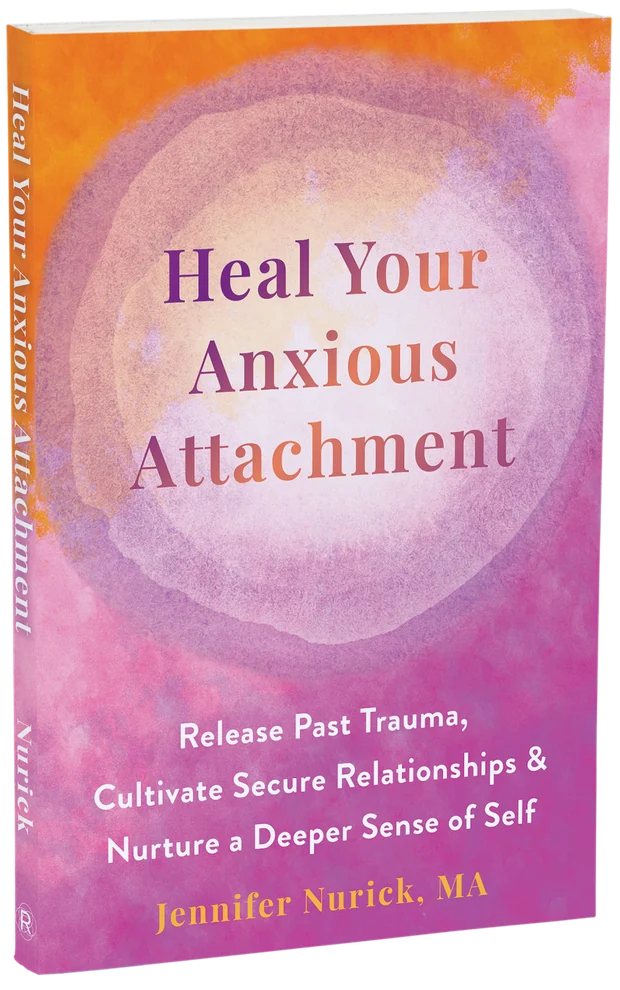
Build secure attachment from the inside out
My book and courses offer a gentle, structured way to understand your patterns and care for the parts of you that learned to protect you. If you would like personal support, you can also work with me directly.


