The Family Scapegoat: Signs, Effects and How to Heal

A friend of mine was the scapegoat in her family. She was repeatedly told she was too volatile, too sensitive, even “crazy”. She was blamed for everything, including things that had nothing to do with her. It took her two years of therapy to see what had really been happening: she was a warm, caring, loving person who had been carrying her family’s pain.
I hear versions of this story often in my clinic. Being scapegoated is one of the most misunderstood roles a person can be given in a family, and its effects can last long into adulthood. If you recognise yourself here, this guide is for you.
What is a scapegoat?
The word comes from an ancient ritual described in the Book of Leviticus, in which the sins of a community were symbolically placed onto a goat that was then sent out into the wilderness. The community felt cleansed. The goat carried the burden.
Today, a scapegoat is a person who is unfairly blamed for the problems of a group. In psychology, scapegoating describes how a group, whether a family, a workplace or a community, relieves its own discomfort by projecting it onto one member. Researcher Gary Gemmill, writing about scapegoating in groups, described how this lets the rest of the group avoid looking at its own difficulties.
What is a family scapegoat?

In a family, the scapegoat is the child, or sometimes adult child, who is consistently blamed, criticised or treated as “the problem”. Their reactions are pathologised, their perceptions are dismissed, and their needs are seen as demands.
Scapegoating is a family systems pattern. It usually says far more about the family than about the person being blamed. When a family cannot hold its own pain, such as a parent’s unresolved trauma, a troubled marriage, addiction or mental illness, that pain has to go somewhere. Projecting it onto one person lets everyone else feel more together and stable than they truly are.
Some people use the term “family scapegoat syndrome” or “family scapegoat abuse” to describe this experience. These are helpful descriptions, but they are not formal diagnoses.
Why do families scapegoat one child?
There is rarely a single reason, but common patterns include:
- Avoiding responsibility. If one person is the problem, no one else has to look at their own behaviour.
- Keeping the family’s story intact. Blaming one member protects the image of a “good” or “normal” family.
- Different temperament. The scapegoat is often the most sensitive, emotionally honest or questioning child, the one who names what others won’t.
- Resemblance. A child may remind a parent of someone they resent, or of a part of themselves they reject.
- The golden child. Scapegoating often sits alongside a “golden child” who can do no wrong. The two roles keep the family system balanced.
A scapegoated child is often the one who reacts to the dysfunction, and is then blamed for reacting. As I often say to clients, you were reacting to something. You were reacting to a pattern.
Signs you were the family scapegoat
You might recognise some of these experiences:
- You were blamed for problems you didn’t cause, sometimes for things that happened when you weren’t there
- You were labelled “too sensitive”, “difficult”, “dramatic” or “the problem child”
- Your version of events was denied or rewritten
- Siblings were treated more kindly, or held to different standards
- When you set a boundary, the family pushed back and called you the unreasonable one
- You felt like an outsider in your own family
- Family members talked about you more than to you
Scapegoating examples
Scapegoating can be loud or quiet. A few examples I hear often:
- A parent’s bad mood is blamed on a child’s “attitude”, even when the child has done nothing
- A teenager’s distress about a parent’s drinking is treated as the family’s real problem
- At family gatherings, one adult child’s past mistakes are retold again and again, while others’ are never mentioned
- When an adult child raises a painful memory, they are told it never happened, or that they are “rewriting history”
The effects of being scapegoated
When you are told repeatedly by everyone around you that you are the problem, you start to believe it. Over time, scapegoating can leave:
- Self-doubt. Learning to distrust your own perception, and wondering whether you are “too much”.
- Shame and a harsh inner critic. The family’s voice becomes your own.
- People pleasing. Working hard to prove you are good, kind or worthy.
- Hypervigilance. Scanning for blame or criticism, even in safe relationships.
- Difficulty with boundaries. Boundaries were punished, so setting them can feel terrifying.
- A sense of not belonging. Feeling on the outside, even among people who care.
- Relationship patterns. Being drawn to people who treat you the way your family did, because it feels familiar.
Many scapegoats also carry real strengths: empathy, honesty, a strong sense of justice, and the ability to see what others miss. These are often the very qualities that made them a target.
The scapegoat through an IFS lens
In Internal Family Systems (IFS) therapy, we see how scapegoating shapes the inner world. Younger parts may carry the burden of being “the bad one”: shame, unworthiness and the belief that something is wrong with them. Protector parts work hard around those wounds. One part may please and appease. Another may stay on guard. Another may lash out or withdraw to keep you from being hurt again.
These parts make sense. They developed in a family where you were not safe to simply be yourself. Healing doesn’t mean pushing them away. It means getting to know them, thanking them, and helping the younger parts release the burdens they were handed, burdens that were never theirs to carry. As your Self becomes a steady, compassionate presence inside, you build inner secure attachment, and the family’s story loosens its grip.
How to heal from being the family scapegoat
1. Name what happened. Recognising scapegoating as a family pattern, and sometimes as a form of emotional abuse, can be the first moment of real relief.
2. Trust your perception again. Write down what you remember. Notice where your account was denied, and practise believing your own experience.
3. Meet your inner critic with curiosity. Ask whose voice it really is. Often it is the family’s, not yours.
4. Grieve. It is natural to feel sadness and anger about the family you needed and didn’t have. Sometimes the hardest part is accepting that the family may never change, because they may still need you in that role.
5. Set boundaries. Decide what contact feels safe. For some people that means changing how they show up at family events. For others it means less contact, or a break. You are allowed to protect yourself.
6. Find people who see you clearly. Friends, chosen family and supportive communities help you experience being liked for who you are. Often scapegoats thrive once they leave the environment that labelled them.
7. Work with a therapist. Scapegoating is relational, so it heals best in relationship. A therapist can help you unpack what happened, find the pause between trigger and reaction, and rebuild trust in yourself. I work with family scapegoating and childhood trauma online, often using IFS therapy.
You might also find these related articles helpful: If You Were Scapegoated in Your Family, Please Read This, How to Heal From Being the Scapegoat in Your Family and Triangulation: When a Child Is Drawn Into Their Parents’ Conflict.
Frequently asked questions
What does scapegoat mean?
A scapegoat is a person who is unfairly blamed for the problems or wrongdoing of others, so that the group can avoid facing its own responsibility.
What is a scapegoat child?
A scapegoat child is a child who is consistently singled out as the source of a family’s problems, and blamed or criticised more than their siblings.
What is the difference between the scapegoat and the golden child?
The golden child is idealised and can do no wrong, while the scapegoat is blamed and can do no right. Both are roles the family system assigns, and both can be painful in different ways.
Is scapegoating a form of abuse?
Chronic scapegoating can be a form of emotional abuse, because it involves ongoing blame, criticism and the denial of a person’s reality.
Can a family scapegoat heal?
Yes. With understanding, boundaries, supportive relationships and therapy, many people who were scapegoated come to trust themselves again and build lives where they are seen for who they truly are.
A final reflection
If you were your family’s scapegoat, you were given a role, not a truth about who you are. Healing is the process of coming home to the person you were before you were handed that role.
What would change for you if you no longer had to carry your family’s pain?
Love, Jen
Discover more from Jennifer Nurick
Subscribe to get the latest posts sent to your email.
Go deeper
Build secure attachment from the inside out
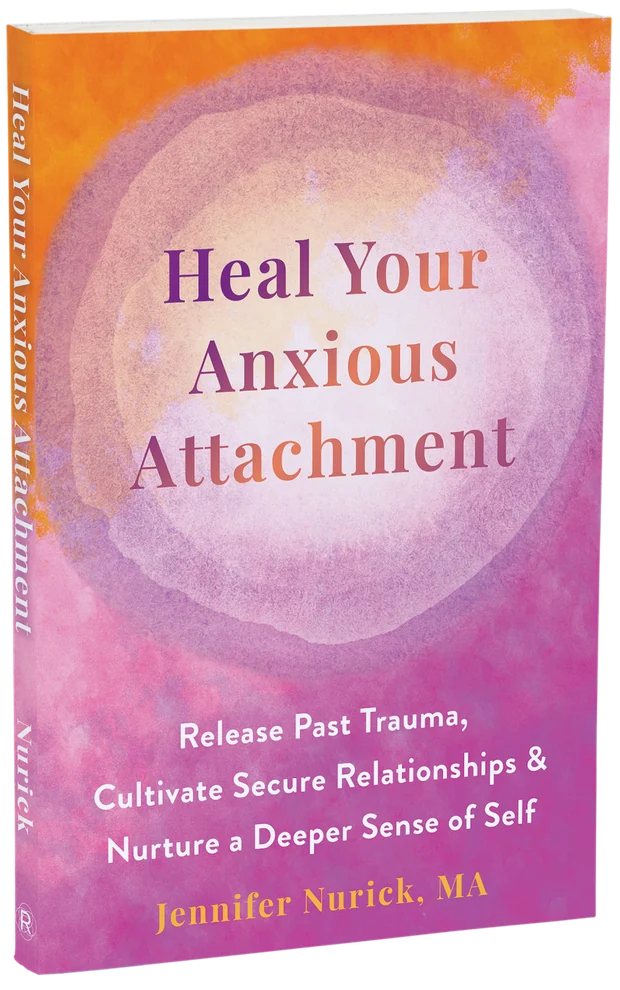
My book and courses offer a gentle, structured way to understand your patterns and care for the parts of you that learned to protect you. If you would like personal support, you can also work with me directly.


